
Start date
Course length
Program Overview
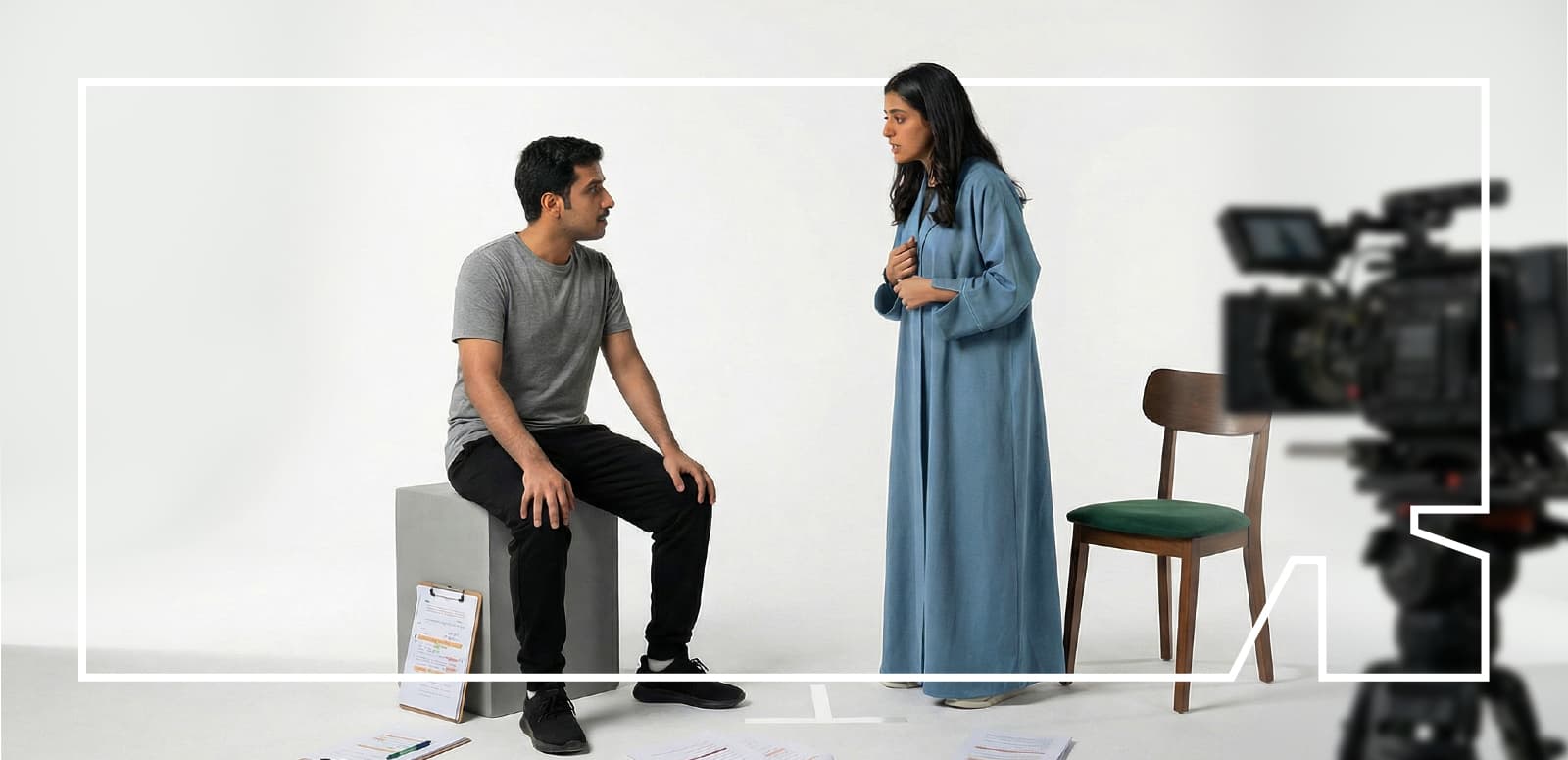
The BA Acting for Theater and Film offers intensive, practice-led training for performance across stage, film, and television. Delivered through an eight-semester curriculum, the program integrates acting technique, voice, movement, and performance creation in an immersive conservatory-style environment.
Grounded in rigorous acting and creative inquiry, the program emphasizes collaboration, ensemble practice, and experiential learning within professional-style rehearsal and production environments. Alumni will be equipped to pursue careers as actors, directors, producers, content creators, and theater educators across stage, screen, and digital media.
In Partnership With:
Learning Objectives
- Train as versatile actors and theater-makers with advanced skills in acting, voice, movement, and performance for stage, screen, and digital platforms.
- Apply professional performance techniques through intensive, practice-led training aligned with contemporary industry standards.
- Create, collaborate, and innovate, producing original work as performers, directors, producers, and creative artists.
- Engage in interdisciplinary practice, integrating acting with digital media, content creation, and emerging performance forms.
- Develop sustainable professional careers, informed by global performing arts traditions, enriched by local cultural contexts, and driven by industry-focused career development.
Exit Award
Intermediate Diploma in Acting for Theater and Film
Assessment Methods
- Performance Critique: Assessment of live and screen performances.
- Written Reflection: Critical analysis of artistic practice and creative development.
- Project Evaluation: Assessment of original creative work across performance and production.
- Showreel Review: Industry-aligned evaluation of professional promotional materials.
- Class Participation: Ongoing assessment of engagement, collaboration, and professionalism.
Admission Criteria
Acting Audition
These will be performed live at the audition day. No pre-recorded monologue is required to be submitted at the time of the application.
Applicants must prepare two contrasting monologues and present them live during the audition day, each student will get approximately 5 minutes of allocated time, while each monologue will be 1–2 minutes in length:
- One monologue selected from the BA Acting Audition Pack*
- One monologue of the applicant’s own choosing (or from the BA Acting audition pack)
*Please note the BA Acting Audition pack is applicable for those candidates that are invited to audition. The pack includes detailed support, guidance, and monologues (speeches) which can be performed at audition.
One monologue may be performed in either English or Arabic. The second monologue must be performed in English.
For Monologues performed in English, we understand that candidates may have varying levels of experience. We are primarily interested in potential, connection to the material, and willingness to engage with the work.
On the audition day, candidates may also take part in a short acting workshop before performing their monologues.
Performance Focus
Audition pieces should demonstrate:
- A clear emotional connection to the character
- Vocal clarity and effective use of spoken text
- Thoughtful and intentional physical choices
- A sound understanding of the dramatic text
What the Audition Panel Is Looking For
The audition panel assesses potential rather than perfection. In particular, applicants are evaluated on:
- Imagination and creativity in the interpretation of character and text
- Curiosity about the craft of acting and openness to exploration
- Engagement with the wider world, reflected through material choice and interpretive insight
- Willingness to take creative risks and respond to direction (where applicable)
The audition process is designed to identify applicants with the capacity to grow, develop, and thrive within a rigorous, conservatory-style training environment, rather than those presenting a finished product.
Admission requirements, program structures, and program-specific requirements are subject to review and may be updated or changed at any time without prior notice. Applicants are advised to visit the program page at the time of admission for the most current information.
What to Expect
- Collaborative, inquiry-based ensemble learning, driven by shared investigation, problem-solving, and collective creative practice at the core of actor training.
- Practice-led, experiential training that integrates rigorous rehearsal with reflection, enabling students to apply technique within authentic performance and production contexts.
- Immersive, professional-style learning environments, including rehearsal rooms, studios, and performance spaces, where students actively test, analyze, and refine their craft.
- Meaningful industry engagement, offering real-world insight, professional exposure, and the business and entrepreneurial skills needed to build, sustain, and shape careers in the performing arts sector.
Program Modules
- Acting for Camera
- Acting Graduation Production
- Acting Technique
- Arabic and World Theatre Styles
- Arabic Communication & Cultural Expression
- Audition Technique
- Auditioning for Film & Television
- Career Preparation: Producing and Creating Theatre
- Combat for Camera
- Content Creation for the Creative Arts
- Creative Enterprise and Cultural Leadership
- Directing for Stage and Film
- Foundation English for Academic Success
- Generative AI in Cultural and Creative Practice
- Improvisation for Camera
- Improvisation Techniques
- Industry and Networking: Business Essentials for Theatre and Film
- Introduction to Stage Direction and Design
- Islamic Practices
- Professional English for the Creative Industries
- Saudi Art and Culture
- Shakespeare: Text and Performance
- Shoot for the Edit: Film and Television Production
- Stage Combat
- The Business of Creative Practice
- The Reel Actor
- Theatre in Education
- Voice Production and Speech
- Voiceover for Gaming and Radio
- World Art and Culture
Career Path After the Program
Career opportunities include, but are not limited to:
- Actor (Theater, Film, Television, and Digital Media)
- Voiceover Artist
- Acting Coach
- Director (Stage and Screen)
- Producer
- Casting Director
- Stage Manager
- Theater Educator / Teaching Artist
- Content Creator / Digital Performer
- Creative Producer or Project Lead
- Theater Maker / Devised Performance Artist
Study Plan
| Course Name | Description | Credit Hours |
|---|---|---|
| Introduction to World Art and Visual Culture | This course introduces global art and visual culture from antiquity to the present, building visual literacy and critical thinking through art historical analysis and comparative study. | 2 |
| Arabic Communication and Creative Expression | This course develops written and spoken Arabic for professional and creative contexts, with a focus on narrative, critical writing, and stylistic precision. | 2 |
| Foundation English for Academic Success I | This course is offered based on the placement test as a non-credit course. It helps RUA students strengthen their English skills, with a focus on academic language for arts and creative industries. | 0 |
| Acting Techniques I | This course introduces key acting techniques through voice, movement, text analysis, camera work, and improvisation, helping students develop imagination, focus, and performance skills. | 6 |
| Acting Scene Study I | This course introduces the craft of acting, building practical performance skills and a foundation in character work, text analysis, and collaborative storytelling. | 6 |
| Total Credit Hours | 16 |
| Course Name | Description | Credit Hours |
|---|---|---|
| Introduction to Saudi Culture and Creative Industries or Introduction to Saudi Heritage | These two courses introduce Saudi culture and heritage as a foundation for understanding cultural identity and the creative industries, and their links to the arts, design, and the creative economy. | 2 |
| Foundations of Business and Entrepreneurship | This course introduces the fundamentals of business, entrepreneurship, management, and marketing through examples from the arts and cultural sectors. | 2 |
| Foundation English for Academic Success II | This course is offered based on the placement test as a non-credit course. It helps RUA students strengthen their English skills, with a focus on academic language for arts and creative industries. | 0 |
| Acting Techniques II | Students further develop their acting skills through work on heightened language and the physical demands of major dramatic styles, while strengthening imagination, focus, and visualization in performance. | 6 |
| Acting Scene Study II | This course explores realist drama through scene study and script analysis, helping students develop performance and critical thinking skills in relation to historical, social, and political context. | 6 |
| Total Credit Hours | 16 |